
Waterhouse VC is a fund that specialises in global publicly listed and private businesses related to wagering and gaming sectors. The fund is only available to wholesale investors.
Since inception in August 2019, Waterhouse VC has achieved a gross total return of +3,820% (annualised at 79%), as at 30 November 2025, assuming the reinvestment of all distributions.
When Gaming Met Wagering
Long before we were old enough to open a betting account, many of us would have paid for the thrill of uncertainty. Pokémon cards, football stickers, FIFA packs. You pay, receive an unknown outcome, and chase the rare edition you will brag about to friends. The reveal is the rush, the downside is typically small, and the upside makes it worth having another go.
When cultural desirability and scarcity turn items into status symbols, “mystery” mechanics become one of the most effective ways to monetise them. These ecosystems are where the next generation of wagering behaviour is being shaped and where our future deal flow lives.

Rihanna showcasing her Labubu doll - $10-$20 blind box collectibles where rare editions resell for thousands, with much of the virality driven on TikTok. Source: X
Most crazes fade, stay niche, or soften as preferences change. What creates something more enduring is utility. Plenty of tradable assets have come and gone. The ones that last in the digital realm tend to behave like money.
Counter-Strike, a free-to-play shooter, shows what happens when that utility sticks. The game lets players buy, sell and trade cosmetic weapon skins in a market now valued at roughly US$5.7 billion. You'd assume gamers drive that number. In reality, a large share of the value comes from gamblers, traders, and speculators who are more interested in price action than headshots.
The Skin Economy
In Counter-Strike 2 (CS2), the latest instalment of the game franchise, two teams of five fight over bomb plants and defusals in short rounds. The game averages close to a million concurrent players at any moment.
The wagering story starts in 2013, when Valve added weapon “skins” - cosmetic finishes with no impact on gameplay. Skins can be found randomly in-game or appear in paid cases. Most are common; ultra-rare skins sit in sub one percent territory.
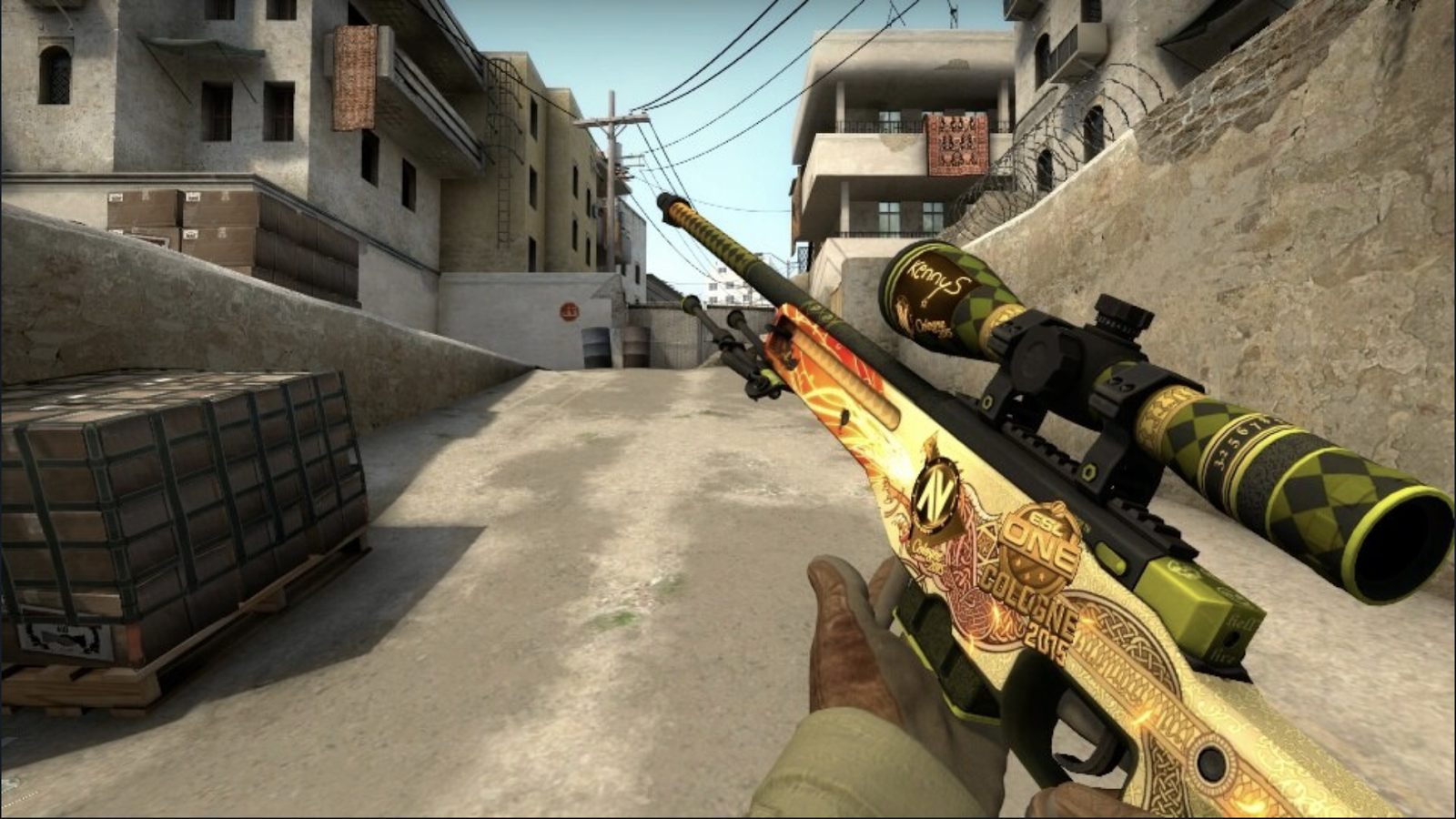
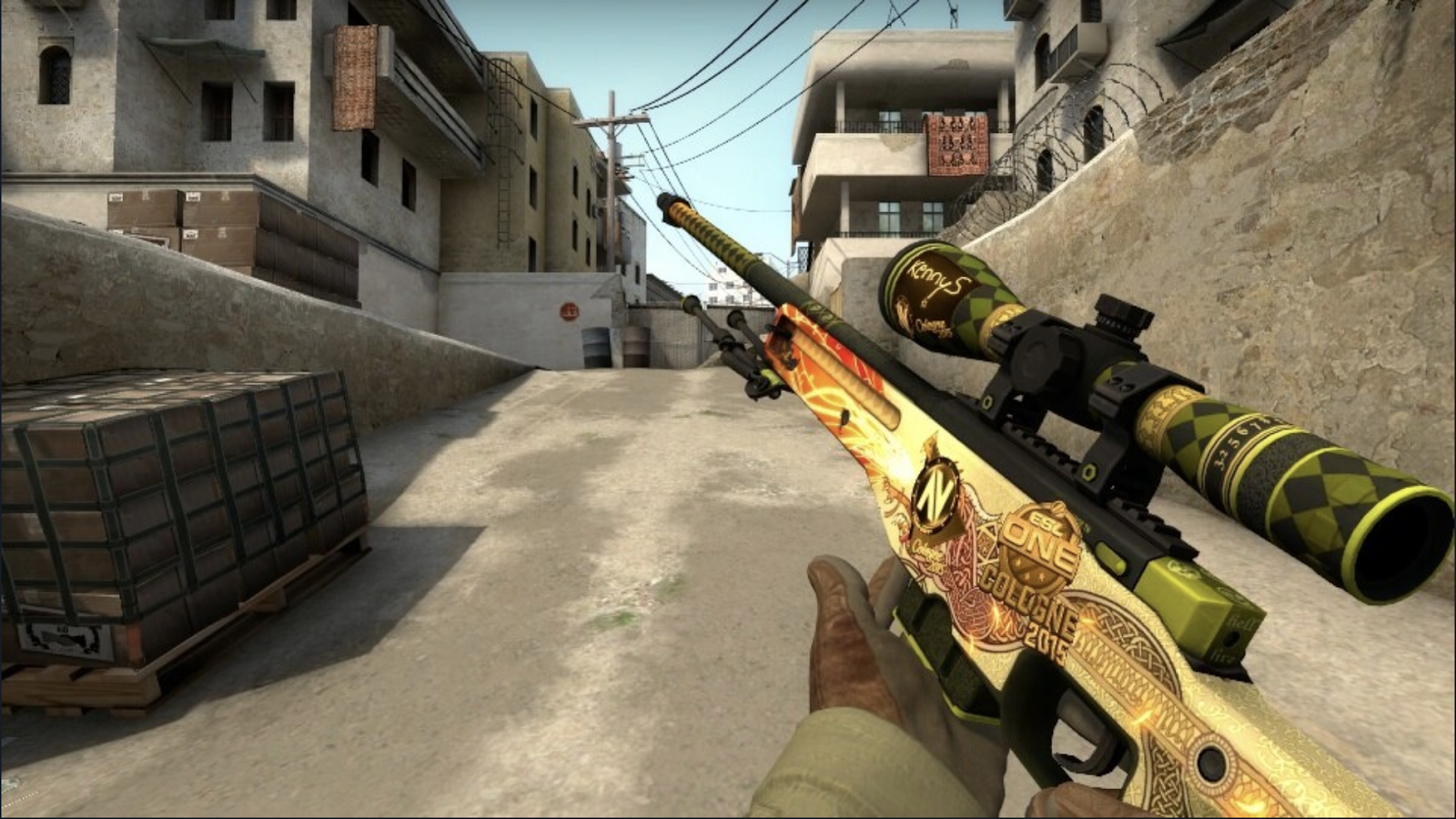
AWP Dragon Lore valued between $11,000 - $13,500 across several marketplaces. Source: Steam Community
At first, skins lived inside Valve’s own marketplace, Steam. You could sell them, but fees were high, prices capped around $1,800, and proceeds stayed trapped in a Steam wallet with no way to cash out.
Three design choices broke it open. Valve made skins freely tradable, giving them real-world value. Steam’s open API let developers read inventories and verify ownership, spawning third-party marketplaces. And platform restrictions pushed high-value trades off-platform, where sellers could finally exchange items for cash. Speculation took hold. Cosmetic items became a full-fledged digital economy.
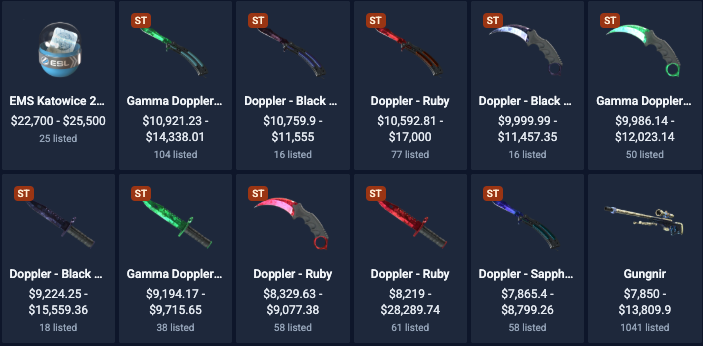
Snapshot of some of the high value skins currently trading on one of many marketplaces. Source: Price Empire
Wild West
The moment skins could be priced, swapped, and cashed out through third-party marketplaces, they started behaving like poker chips. Esports match betting came first: in 2014, CSGO Lounge let users log in with Steam, deposit skins, and back teams. The items were held in escrow, assigned notional value based on the Steam marketplace, and paid out in skins if your bet won.
Casino formats followed quickly: roulette, coinflips, case openings and jackpots. By 2016, some estimates put the annual handle at around $5 billion (Source: Eilers & Krejcik).
Esports is a huge industry today. Back then it didn't pay, so incentives warped fast. Counter-Strike team members have been permanently banned for collusion, deliberately losing matches.
Selling the Dream
Influencers poured fuel on the fire. Skins gambling made perfect content: streamers yelling as their one percent chance came in. Bigger bets meant better clips, which meant more viewers clicking referral links. In several cases, the promoters owned equity in the casinos they were promoting.
The noise drew regulatory attention. In mid-2016, Valve sent cease-and-desist letters to over forty operators. Later that year, the Washington State Gambling Commission ordered Valve to stop allowing skin transfers for gambling, describing the ecosystem as a "large, unregulated black market”. Two years later, Valve introduced a seven-day trade cooldown on items.
Adapting Market
Trade cooldowns have had limited impact. In February 2025, 45 skins gambling sites recorded 6.9 million unique visits globally. Many now resemble crypto casinos with CS2 features bolted on, sidestepping Valve's restrictions by holding skin inventories and issuing internal balances while waiting for trades to clear.
The third-party ecosystem benefits Valve. It drives demand for in-game case openings, sustains the wider skin economy, and keeps interest high in the game and its tournaments. Closing the API would shrink the pie.
That money now sits at the centre of esports. Many of the most expensive skins seen on stage are borrowed from collectors and traders, and crypto casinos dominate shirt sponsorships. As legitimate earnings grow, the incentive to cheat shrinks.
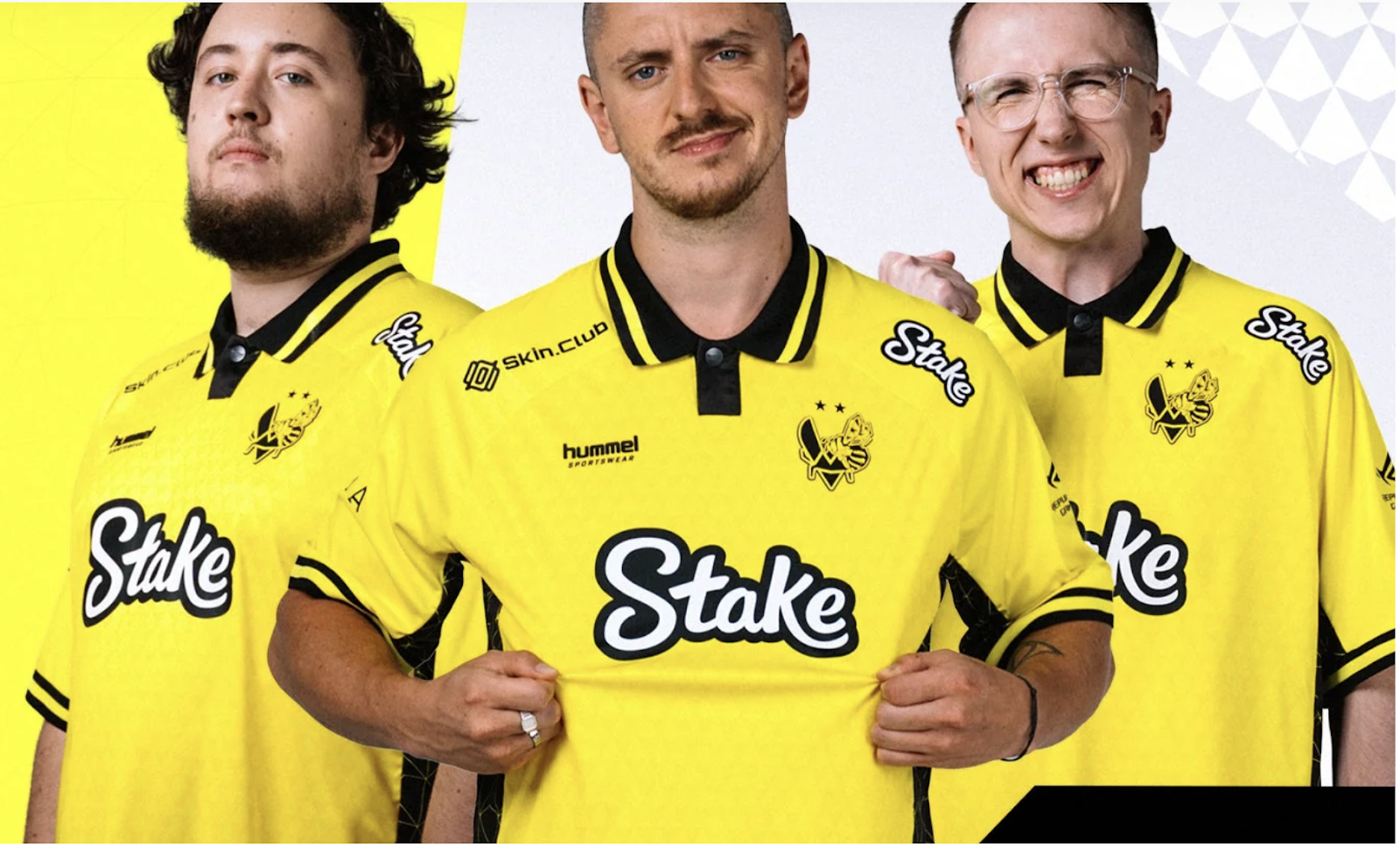
CS2 Team Vitality announced a major multi-year agreement with Stake. Source: Vitality
Beyond gamblers, the liquidity attracts traders. A teenager stumbles upon a $15,000 knife, either in-game or through a gambling site and wants to sell immediately. Speculators are waiting. Lack of regulation also invites money launderers, and they're rarely shopping for the best price.
The money circulating within CS2, combined with limited oversight, has also made the space fragile. Operators have little incentive to self-regulate through geo-blocking or meaningful age checks, because doing so would mean giving up wallet share to competitors.
The Ecosystem and Opportunity
What's striking about CS2 is how seamlessly gaming and wagering have fused. Intentional or not, skins made it possible. They hold value in-game, on stream, on betting sites, and at cash-out.
That breadth created liquidity, and with it an ecosystem of professional traders, competitive gamers, esports bettors, collectors, and a long tail of grey-market operators all sharing the same market.
For Waterhouse VC, there's opportunity here, but also signal. Where younger users spend their time, money, and attention is where the next generation of wagering products will be built. The winners won’t simply offer bets - they’ll build utility, liquidity, and culture around them.
Pitch Us
If you know any gambling tech companies seeking capital or distribution support, our new 'Pitch' page makes it simple to connect with our investment team.
Media
Tom spoke on Ausbiz about the UK Budget impact on the wagering market and the growth in Australians gambling offshore.
For wholesale investors interested in following wagering and gaming industry news and trends, please follow our updates on Twitter (@waterhousevc) and WaterhouseVC.com.
DISCLAIMER AND IMPORTANT NOTES
Please note the above information in relation to Labubu, Pop Mart, Rihanna, Counter Strike, Eilers & Krejcik, Valve, Steam Community, Price Empire, Vitality, Twitch, CSGO Lounge, Washington State Gambling Commission, and Stake is based on publicly available information and should not be considered nor construed as financial product advice. The information provided in this document is general information only and does not constitute investment or other advice. Readers should consult and rely on professional investment advice specific to their individual circumstances.
Not for Release or Distribution in the United States of America
This material may not be released or distributed in the United States. This material does not constitute an offer to sell, or a solicitation of an offer to buy, any securities in the United States or any other jurisdiction in which such an offer would be illegal. The units in the Fund have not been, and will not be, registered under the U.S. Securities Act of 1933, as amended (the U.S. Securities Act) or the securities laws of any state or other jurisdiction of the United States. Accordingly, the units in the Fund may not be offered or sold in the United States unless they are offered and sold, directly or indirectly, in transactions exempt from, or not subject to, the registration requirements of the U.S. Securities Act and any other applicable United States state securities laws.
General Information Only
This material is for general information only and is not an offer for the purchase or sale of any financial product or service. The material has been prepared for investors who qualify as wholesale clients under sections 761G of the Corporations Act or to any other person who is not required to be given a regulated disclosure document under the Corporations Act. The material is not intended to provide you with financial or tax advice and does not take into account your objectives, financial situation or needs. Although we believe that the material is correct, no warranty of accuracy, reliability or completeness is given, except for liability under statute which cannot be excluded. Please note that past performance may not be indicative of future performance and that no guarantee of performance, the return of capital or a particular rate of return is given by Sandford Capital, Waterhouse VC or any other person. To the maximum extent possible, Sandford Capital, Waterhouse VC or any other person do not accept any liability for any statement in this material.
Financial Regulatory Oversight and Administration
Waterhouse VC is an Australian Unit Trust denominated in AUD and available to wholesale institutional investors worldwide with a minimum of AUD 500,000 or USD / EUR / GBP / JPY / CHF equivalent. This material has been prepared by Waterhouse VC Pty Ltd (ABN 48 635 494 861) (‘Waterhouse VC’, ‘Trustee’, ‘us’ or ‘we’) as the Trustee of the Waterhouse VC Fund (the ‘Fund’). The Trustee is a corporate authorised representative (CAR 1278656) of Sandford Capital Pty Limited (ABN 82 600 590 887) (AFSL 461981) (Sandford Capital) and appoints Sandford Capital as its AFS licensed intermediary under s911A(2)(b) of the Corporations Act 2001 (Cth) to arrange for the offer to issue, vary or dispose of units in the Fund.
Performance
Past performance of Waterhouse VC is not a reliable indicator of future performance. We make every endeavour to ensure results are accurate. Waterhouse VC Pty Ltd does not guarantee the performance of any strategy or the return of an investor’s capital or any specific rate of return. No allowance has been made for taxation, where applicable. We encourage you to think of investing as a long-term pursuit. Waterhouse VC’s results are indicative only and subject to subsequent year end external financial review.
Copyright
Copyright © Waterhouse VC Pty Ltd ACN 635 494 861. No part of this message, or its content, may be reproduced in any form without the prior consent of Waterhouse VC.
Governing Law
These Terms and Conditions of use are governed by and are to be construed in accordance with the laws of New South Wales. By accepting these Terms and Conditions of use, you agree to the non-exclusive jurisdiction of the courts of New South Wales, Australia in respect of any proceedings concerning these Terms and Conditions of use.